When Brazil Stopped Being Brazil
7 July 2026
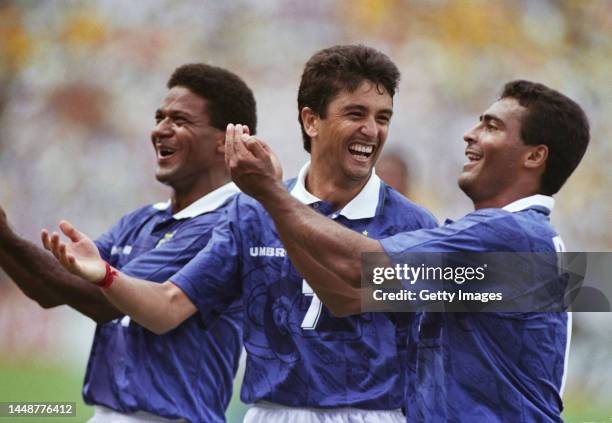 Why appointing Michael O'Leary to run Apple feels a lot like appointing Carlo Ancelotti to manage Brazil.
As we head into the business end of the World Cup, Brazil's exit at the Round of 16 has really got me thinking. Not because they didn't make it to the quarterfinals, but because it made me think about how far Brazil have drifted from their footballing DNA.
My first football memory goes back to the summer of 1994.
I was on holidays in Donegal with my family during USA '94, staying halfway up Malin Head, just a few miles from where Packie Bonner's home was. I was 10 years old and, like most kids around the country, completely caught up in USA 94 and Big Jacks Army.
Jack Charlton was a real leader. A World Cup winner in '66, a tough Geordie and someone who knew exactly what he wanted his Ireland team to look like.
It wasn't complicated. Keep it simple. Get it forward. Win the second ball. Put 'em under pressure.
It wasn't fancy and it certainly wasn't everyone's idea of football. Nobody was talking about possession stats or playing out from the back. It was basic. It played to Ireland's strengths and it suited Jack perfectly.
The team reflected the manager.
Ireland qualified for Euro '88, Italia '90 and USA '94, giving us one of the greatest periods in Irish football history.
Watching Brazil this week got me thinking about that.
Brazil and the World Cup go hand in hand. When you think of Brazil, you think of yellow shirts, flair, freedom and some of the greatest footballers the game has ever seen. Pelé, Zico, Romário, Ronaldo, Rivaldo, Ronaldinho, Kaká...
They didn't just win World Cups, they lit them up. They built the blueprint for how football should be played... unless you're Dutch, of course. For football fans, Brazil were the main event.
This tournaments Brazil squad isn't short of talent. Vinícius Júnior, Endrick, Rodrygo, Raphinha, Bruno Guimarães, Matheus Cunha... there is more than enough quality there to progress deep into latter stages.
To me, this Brazil team feels very un-Brazilian. Why?
I don't think it's about talent. I think it's about identity.
Which brings me to Carlo Ancelotti.
On paper, his appointment in May 2025 made perfect sense. One of the greatest managers football has ever seen taking charge of the most successful nation in World Cup history. The Brazilian FA described it as "the coming together of two icons."
But there was one thing that stood out. Ancelotti became the first non-Brazilian permanent manager of the Brazil national team.
That might not matter to some people. I think it matters a lot. Not because I believe a Brazilian passport automatically makes someone a better football manager. Far from it.
But Brazil isn't just another football team. It's a footballing identity based around freedom, creativity and expression.
Ancelotti, on the other hand, built his career differently. His teams identity are based around organisation, disciplined and being balanced. It's exactly why he's one of the greatest managers of all time.
But to me, appointing Carlo Ancelotti to manage Brazil is a bit like appointing Michael O'Leary as CEO of Apple.
Would Michael O'Leary be capable? Absolutely. Would he run a hugely successful organisation? Probably.
But would Apple still feel like Apple? Probably not.
Sometimes the best leader isn't the right leader. Sometimes the leader has to reflect the identity of the organisation.
Because if the team no longer reflects the manager, and the manager doesn't reflect the culture, eventually the organisation stops looking like itself.
The same thing happens in business all the time.
Companies recruit CEOs with the best CVs. They copy the market leader. They introduce new processes because they worked somewhere else. Sometimes those decisions make the organisation better. But sometimes they slowly dilute away the very thing that made the organisation stand out and be great in the first place.
Every organisation has a DNA.
It's not written in a strategy document. It's the way people think. The way decisions get made. The way customers experience the business. It's what people associate with your organisation.
Every organisation has to evolve and change.
The ones that evolve successfully are the ones that learned to hang onto the thing that made them successful in the first place.
Maybe that's the lesson from Brazil's World Cup.
Blog by Padraig O'Donnell