An Post: David McRedmond, the Mailman Who Delivers. Should RTÉ Make the Call?
By Padraig
18 October 2026 · 11 min read
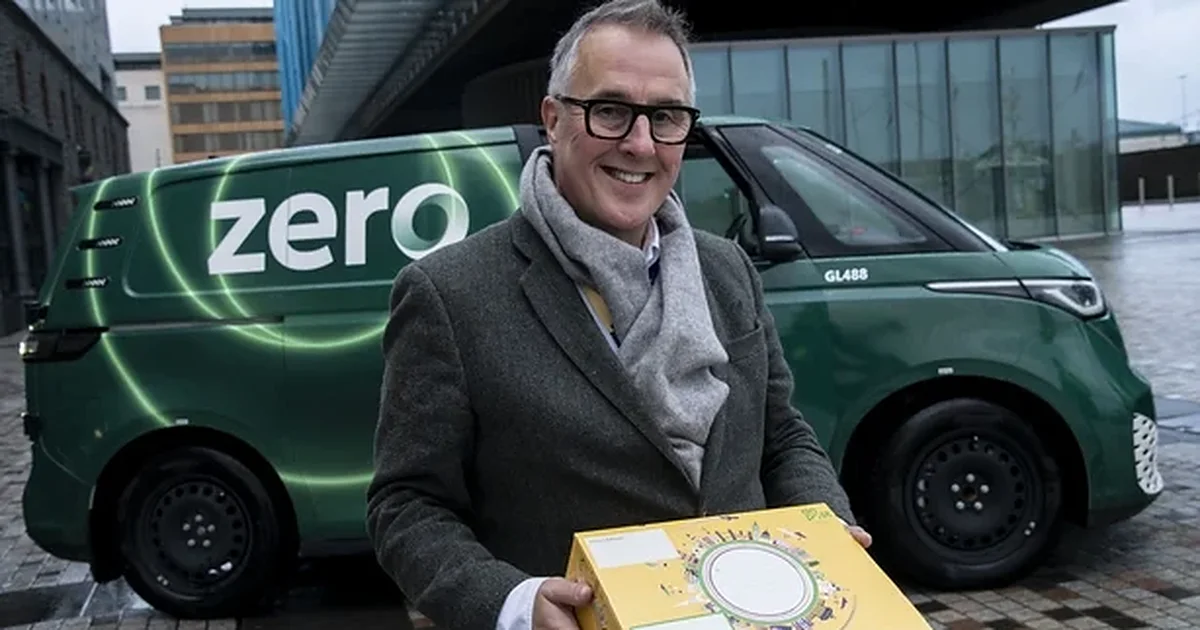
My general philosophy is that all businesses are dying; you have to find the new thing.
David McRedmond, The Irish Times, 4 July 2025
As a kid, I loved Postman Pat and of course his black and white cat! I always looked forward to our postman coming to the door.
An Post is one of those Irish institutions many of us take for granted nowadays. For me and my family, during Covid-19, the postman became much more than someone delivering letters and the many, many parcels my wife was having delivered to the house. For people isolated from family and friends, that familiar face at the door and the chance of a quick chat made a real difference. In many ways, the postman became a friend to the nation during those tough times, and we shouldn't forget them.
Over the last few weeks, I have written in The Strategic Times about leadership styles, limited resources and adapting businesses to change. An Post brings many of these strategic management themes together under one roof.
Behind that familiar postal service is a business that has undergone significant transformation over the past decade. Traditional letter volumes have declined, online shopping has grown and customer expectations around delivery times have changed. Since taking over as chief executive in 2016, David McRedmond has overseen a major change in An Post's direction. The company has expanded its parcel business, developed new services and invested in the infrastructure needed to compete in a changing market. Financial challenges remain, but An Post shows how a long-established, State-owned organisation can adapt without abandoning its public-service responsibilities.
RTÉ, Ireland's national public-service broadcaster, has also spent the past few years under intense scrutiny following revelations about undisclosed presenter payments and wider questions about financial mismanagement and governance. The controversy damaged public trust, while continued pressure to reform and disagreements over Government funding have kept the organisation in the limelight.
The latest RTÉ fiasco got me thinking about An Post and how McRedmond managed its transformation. Could RTÉ learn from the way another State-owned organisation approached change?
An Post, RTÉ and the challenge of change
When McRedmond took over An Post in October 2016, the company was facing a difficult future. It reported a pre-tax loss of €15.6 million that year and needed to find a sustainable way forward.
RTÉ faces a different but comparable challenge. Audiences are moving away from traditional television and radio towards streaming, online platforms and on-demand content. Competition for people's attention has intensified. RTÉ has a distinct public-service responsibility, but that does not remove the need to adapt its operating model.
Recognising the need for change is one thing. Delivering it is another. This is where An Post's story becomes interesting.
Dynamic Capabilities: adapting rather than standing still
Dynamic Capabilities Theory, developed by David Teece, Gary Pisano and Amy Shuen, examines how organisations respond to changing environments. It is commonly explained through three activities: sensing opportunities and threats, seizing opportunities, and transforming the organisation's resources and capabilities.
An Post's experience illustrates all three. The company recognised that traditional mail was no longer a sustainable foundation for the business and began reshaping its operations around new opportunities.
1. Getting the core business back on track
Traditional letter volumes were declining, costs were high and digital communication meant An Post could no longer rely on letter delivery to generate the same income.
An Post responded by increasing stamp prices from 72 cent to €1 in April 2017, restructuring its mail and parcels operations and reducing its workforce. The increase reflected the financial pressures facing a business whose traditional service was in decline.
The parcels business was relaunched with later cut-off times and evening and Saturday deliveries. An Post reported that the relaunch contributed an additional €8 million in profit during 2017, while parcel volumes rose by 30% compared with the previous year. The changes were developed with the involvement of the Communications Workers' Union, recognising the workforce's role in making the new operating model work.
McRedmond also changed how the business was structured. An Post was reorganised into two distinct units, Mails & Parcels and An Post Retail, each with its own management team and responsibility for its financial performance. The senior management team was reduced from 11 executives to six, giving the delivery business and the post-office network clearer responsibilities and focus.
2. Building the parcel business around e-commerce
An Post's existing network was an obvious asset to adapt to the growing market. It already had delivery routes, vehicles, sorting facilities and a nationwide presence. As online shopping grew, it had an opportunity to use this network to compete in parcel delivery.
In 2025, An Post delivered 73 million parcels, up from 54 million in 2024, while letter volumes fell from 360 million to 294 million. Its e-commerce business grew by 27%, helping drive revenue beyond €1 billion for the second consecutive year.
The postman as we knew them has evolved. They are now much more than someone walking through the neighbourhood with a satchel. Today, you generally see them arriving in a small electric van or on a delivery bike with a trailer carrying packages being sent to homes every day. It is a visible example of how the job, and the business behind it, has changed.
3. Finding new uses for the post-office network
An Post also built on its established position in financial services. Post offices were already a trusted destination for customers looking to access cash, buy State Savings products, pay bills and complete everyday transactions. An Post expanded this offering through An Post Money, broadening its range of financial products to include personal loans, credit cards and multi-currency cards.
The business also developed its parcel and e-commerce services as online shopping grew. AddressPal allowed Irish customers to shop with UK retailers using a UK delivery address, while parcel collection, returns and drop-off services provided greater convenience for customers and retailers. These added services allowed An Post to build on its existing infrastructure and customer relationships to capture opportunities beyond traditional mail.
That network has also changed. An Post's post-office numbers fell from 1,131 in 2016 to 879 in 2025, a reduction of 252 offices. As demand for traditional services declined, the company had to make difficult decisions about the size of its network, while recognising the importance of post offices in communities where access to cash and face-to-face services remains essential.
4. Investing in the business it wants to become
An Post has invested in technology to change how it operates and how customers interact with the business. Its app is a good example. Customers can track parcels, manage deliveries and returns, and buy digital stamps, giving them more control over their post without needing to visit a post office or contact customer services. It is a simple but important change in how a traditional postal service fits into people's everyday lives.
Behind the scenes, investment in automated parcel sorting has helped increase capacity as online shopping grows. The company has also invested in electric vehicles and improved delivery infrastructure, while its refreshed brand in 2019 reflected a business moving beyond its traditional image. Taken together, these changes show that An Post's transformation has involved more than finding new sources of revenue. It has also had to change how it delivers its services and how customers experience the business.
Revenue grew beyond €1 billion, but underlying profit was just €2.8 million in 2025. An Post has come a long way, but turning that growth into a stronger, more sustainable business remains the challenge.
What can RTÉ learn from An Post?
RTÉ needs to understand how audience behaviour is changing, decide what its future services should look like and make the operational changes needed to deliver them. It also needs to examine its costs, technology, property and internal processes rather than treating each financial difficulty as a separate problem. Easier said than done.
There is an important difference between the organisations' structures. An Post is a State-owned commercial company with public-service obligations, while RTÉ is a statutory public-service media organisation with a different legal remit, governance requirements and funding model.
RTÉ cannot be judged solely on commercial performance. Its role includes providing content and services that may not be commercially attractive but remain important to Irish society. Equally, its public-service remit should not remove the expectation that it manages funding responsibly and adapts to changing audiences.
The bigger question is whether RTÉ's current structure gives it the freedom and incentives to drive real change.
My view: public ownership must come with responsibility
I am not an advocate for privatisation, and I also don't believe State-run organisations should be driving huge profit. I believe the State should retain control of our key national assets, but it must also be capable of running them properly.
We have seen too much waste, mismanagement and poor governance involving taxpayers' money. Public ownership cannot be an excuse for poor performance, and continually providing more funding is not a solution to prop up poor performance.
RTÉ reported a €22.5 million surplus in 2025, up from €5.5 million the previous year. However, €9.6 million came from accounting adjustments rather than additional revenue, and planned projects were also pushed into 2026. The improvement was needed, but I would be slow to say RTÉ has turned a corner. The real test is whether it can keep improving performance while investing in its offering.
The only way I see RTÉ standing a chance of real transformation is for the Government to give serious consideration to restructuring it as a commercial semi-state company with a clear, protected public-service mandate. To attract top leadership, I believe RTÉ needs to be allowed the freedom to operate commercially and generate revenue while being held accountable for the public funding it receives.
The funding model also deserves scrutiny. The Irish public pay a television licence fee, yet RTÉ generates significant advertising revenue. In contrast, across the pond, the BBC's domestic public-service television and radio services do not carry conventional advertising. The broadcasters operate in different markets, but it is reasonable to question whether the balance between public funding and advertising in Ireland is right. If the public are paying a licence fee, what should that contribution guarantee? How should public funding and commercial income work together? Surely there is a potential conflict here. Who are RTÉ's key stakeholders: the public or the advertisers?
What do we want RTÉ to be as a broadcaster? It is easy to fill a schedule by buying in and regurgitating old content, but I believe RTÉ needs to offer more than that. It should invest in Irish talent, develop homegrown programming and create content that reflects Irish life and gives audiences something they cannot get elsewhere. That means taking risks, backing new ideas and giving Irish talent the opportunity to develop.
TG4 has shown that a broadcaster with a smaller budget can still punch above its weight by carving out a distinctive identity. RTÉ operates on a different scale and has a broader remit, but there are lessons in what can be achieved with creativity, a clear purpose and a willingness to develop content for specific audiences. The Traitors Ireland, hosted by Siobhán McSweeney, is a recent example of Irish talent and production contributing to a format that can attract a broad audience. The ambition should be to create more of our own success stories.
I am not suggesting RTÉ can simply copy An Post, ESB or TG4. Each has a different purpose and operates in a different environment. But I believe the Government needs to look seriously at how RTÉ is structured. The objective should be a broadcaster that makes better use of public funding, develops Irish talent and produces content people want to watch, while protecting its public-service role.
Conclusion
McRedmond has moved on, leaving An Post in considerably better shape than he found it, although the next chapter will bring its own challenges. The real test is whether the business can sustain that progress without him.
RTÉ is a different beast. But if An Post can reinvent itself without abandoning its public-service role, why should RTÉ be any different? Perhaps the problem isn't that RTÉ needs more money. Perhaps it needs a different structure, a different mindset and the willingness to admit that the old one isn't working.
McRedmond ensured that the mailman could keep on delivering. The question is whether RTÉ can get its house in order, or we will see in time whether it has simply just got the wrong address and is at risk of being returned to sender once and for all.
Blog by Padraig