The Dennis Rodman Problem: You Don't Put A Saddle On A Mustang
By Padraig O'Donnell
27 July 2026 · 6 min read
What Phil Jackson Understood About Leadership
There is a famous phrase that perfectly captures Dennis Rodman.
"You don't put a saddle on a mustang."
The phrase is often attributed to Chuck Daly, Rodman's coach with the Detroit Pistons, where they won two NBA championships together in the late 1980s. Daly understood something that many leaders struggle with: you don't get the best from exceptional people by trying to make them ordinary.
Years later, Phil Jackson understood exactly the same thing.
Jackson's leadership approach is a great example of Path-Goal Theory, developed by Robert House. The idea is simple: great leaders don't manage everyone the same way. Their role is to understand what people need to succeed, remove obstacles and create the conditions where individuals can perform at their best.
Phil Jackson understood that Michael Jordan and Dennis Rodman were both elite performers, but they required completely different approaches. Jordan needed challenge. Rodman needed trust, belonging and clarity around his role. The goal was the same — win — but the path to achieving it was different for each person.
Why I Choose This Topic
I grew up in the era of Michael Jordan and the Chicago Bulls. Back then, Channel 4 used to show NBA late at night and I regularly stayed up until all hours watching. I was lucky enough to witness the legendary Bulls vs Utah Jazz Finals in 1998, the final championship of their six titles during the 1990s. Like everyone, I loved Jordan. He was iconic. Years later, The Last Dance brought the Bulls back into everyone's living rooms during Covid and reminded a new generation just how special that team was.
The Bulls were about much more than Jordan. Every great organisation needs individual brilliance, but rarely can it depend on the genius of one person. The greatest organisations have to be built around superstars and talent, but they are dependent on role also, players who understand exactly what the team needs from them. The people who complement others, do the things nobody else wants to do and bring something unique that nobody else can.
As I got older and moved into management roles, I became fascinated by Jackson and how he assembled players alongside Jordan. Scottie Pippen deserved every bit of the attention he received. He was a generational talent in his own right and arguably one of the greatest all-round players in NBA history. But there were also brilliant role players like Toni Kukoč and Steve Kerr who could have started on almost any other NBA team. They had the talent to demand a bigger roles, but they were selfless enough to embrace what the Bulls needed from them. I could write an article about either of them and the silent roles they played in building one of the greatest sporting teams ever assembled.
Instead, I want to focus on Dennis Rodman.
Uncontrollable
Partly because I loved watching how he played. The intensity. The unpredictability. The individuality.
Also, because I tried to play basketball like him.
Through my teens, I would play basketball with friends who were much better than me. They were diehard basketball guys. I wasn't. I was a rugby player playing average basketball. I wasn't particularly tall, I wasn't playing organised or coached basketball in school and, if I'm honest, I was a bit wild.
But when I joined them, I knew my role. I had the Rodman role. Defend. Fight for rebounds. Do the dirty work. Get the ball to the players who could actually score. I even got Rodman's trainers and Bulls jersey one Christmas. Looking back, I think that is why I found him so interesting. Here was someone who looked completely different from the traditional image of a professional athlete. The coloured hair. The tattoos. The piercings. The wrestling appearances. The trips to Las Vegas. The moments where he disappeared from the team. Rodman was unpredictable. He was unconventional. He didn't fit the usual mould.
To many people, he was a problem.
To Phil Jackson, he was essential.
The Problem
Every organisation has someone who doesn't quite fit the mould. The person who challenges the culture. The person who works differently. The person who frustrates people because they don't behave in the expected way.
Most leaders see the problem. Phil Jackson saw the opportunity.
The easy leadership decision would have been to try and change Rodman. Make him more like everyone else. Make him fit the traditional expectations of a superstar athlete.
Jackson did the opposite. He understood what Rodman brought that nobody else could.
The team didn't need another Batman. The Bulls didn't need another player competing with Jordan for star status. They needed more Robins — role players who understood their role, embraced what they did best and allowed the team to perform better.
Rodman was arguably the greatest rebounder of his generation. He defended the best players, fought to create extra possessions and brought an intensity that changed games. Yes, he created distractions. Yes, he created headlines. But Jackson understood that the value he brought outweighed the noise.
Rodman's value wasn't because he was like everyone else.
His value was because he wasn't.
Great Leaders Don't Manage Everyone The Same
This is where Phil Jackson's leadership becomes fascinating.
A lot of managers believe fairness means treating everyone the same. The best leaders understand that people are different, and they need different approaches to excel. Jackson didn't manage Michael Jordan the same way he managed Dennis Rodman.
Jordan needed challenge. Rodman needed trust, a sense of belonging and clarity around his role and what the team needed from him. Jackson didn't give Rodman unlimited freedom. He gave him the freedom to be himself while making sure he understood what winning required. Rodman still had expectations. He still had to defend, rebound and sacrifice for something bigger than himself.
Jackson wasn't removing accountability. Jackson created the conditions where Rodman's unique strengths could benefit the team.
The Leadership Lesson
Every organisation has people who don't fit the traditional mould. The person who thinks differently. The person who challenges existing ways of working. The person who frustrates some people but delivers something nobody else can.
In business enviornments, managers often try to make people fit the system. We create processes, behaviours and cultures designed around consistency and predictability. But often the people who create the biggest impact are the ones who challenge the existing way of doing things. The person who sees a different solution. The person who questions why something has always been done a certain way. The person whose style may frustrate others but whose contribution moves the dial.
Alex Ferguson understood this with Eric Cantona at Manchester United. Cantona was unpredictable, unconventional and not always the easiest player to manage, but Ferguson recognised that those same qualities were part of what made him special. This article could easily have been written about Ferguson and Cantona.
The mistake leaders make is trying to remove the difference. The better approach is understanding it. What value does this person bring that nobody else can?
Great organisations are not built by making everyone the same. They are built by understanding what makes each person valuable and creating an environment where they feel safe and can succeed.
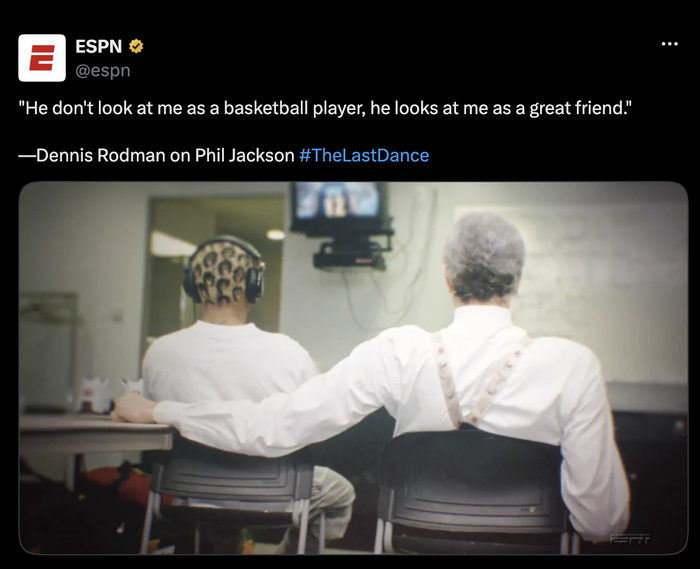
Great leaders don't try and solve the Dennis Rodman problem.
They understand just like Phil Jackson did.
Blog by Padraig O'Donnell