The Green Bay Packers: Ownership, Belonging and the Question of Agency
By Padraig O'Donnell
5 October 2026 · 9 min read
“I would be really concerned to lose them.”
Those were the words of UK Prime Minister Andy Burnham this week when asked about the possibility of Manchester City's Abu Dhabi owners selling the club, just a day after an independent commission found City guilty of serious breaches of the Premier League's financial rules covering nine seasons between 2009/10 and 2017/18. Burnham pointed to the ownership group's investment in Manchester and its role in turning City into a global football force. City has since appealed the commission's decision.
It is a strange sentence to hear in the middle of a story about financial breaches, but it highlights something I have been thinking about when it comes to sports ownership. What does an owner actually mean to a club, and what happens when the interests of the people who own the organisation and the people who run it aren't exactly the same?
My interest in this area over the last few years comes from the fact sports ownership has changed considerably. Now we havr hollywood A-listers buying into clubs, former sporting greats such as Tom Brady have become owners, and sovereign wealth funds and private equity are taking stakes in some of the biggest sporting organisations in the world. Then you have some totap outliers like the Green Bay Packers, where more than half a million people can say they own the team.
Ownership also brings Agency Theory into the picture. Agency Theory looks at the relationship between the people who own an organisation and those appointed to run it, and what happens when their interests differ. The humble Green Bay Packers offer a different perspective on that relationship.
From Midnight Madden to Green Bay
I've been a Green Bay Packers fan for most of my adult life, a Cheesehead as they are known. My interest in the NFL probably started like it did for plenty of Irish kids with time on their hands during college term, staying up late playing the iconic Madden game on the PlayStation, picking a team and slowly getting to know the players and the sport. For me, that team was Green Bay.
Back in the late nineties and early noughties, Brett Favre was the quarterback and he was hard not to like. He looked like GI Joe and played with an all-action, almost reckless style. Favre was tough, aggressive and always looking to make a big play. He led Green Bay to back-to-back Super Bowls, winning Super Bowl XXXI against the New England Patriots following the 1996 season before losing Super Bowl XXXII to the Denver Broncos following the 1997 season.
Then Favre left Green Bay for nearby rivals Minnesota Vikings, going from Packers hero to pantomime villain almost overnight. Green Bay eventually had another franchise quarterback in Aaron Rodgers, who took over and led the Packers to another Super Bowl victory following the 2010 season. Favre was what first drew me to Green Bay, but the team has a lot more to it than the quarterbacks who have played there.
Green Bay is steeped in history, from the iconic Lambeau Field and those famous images of games played in blizzard conditions to Vince Lombardi, the legendary Packers head coach whose name was later given to the Super Bowl trophy. The city has a population of around 100,000 and sits on the western shore of Lake Michigan. It is remarkable that a place of that size has produced one of the most recognisable teams in world sport.
But it is the Packers' ownership model that I want to focus on.
Who Owns the Packers?
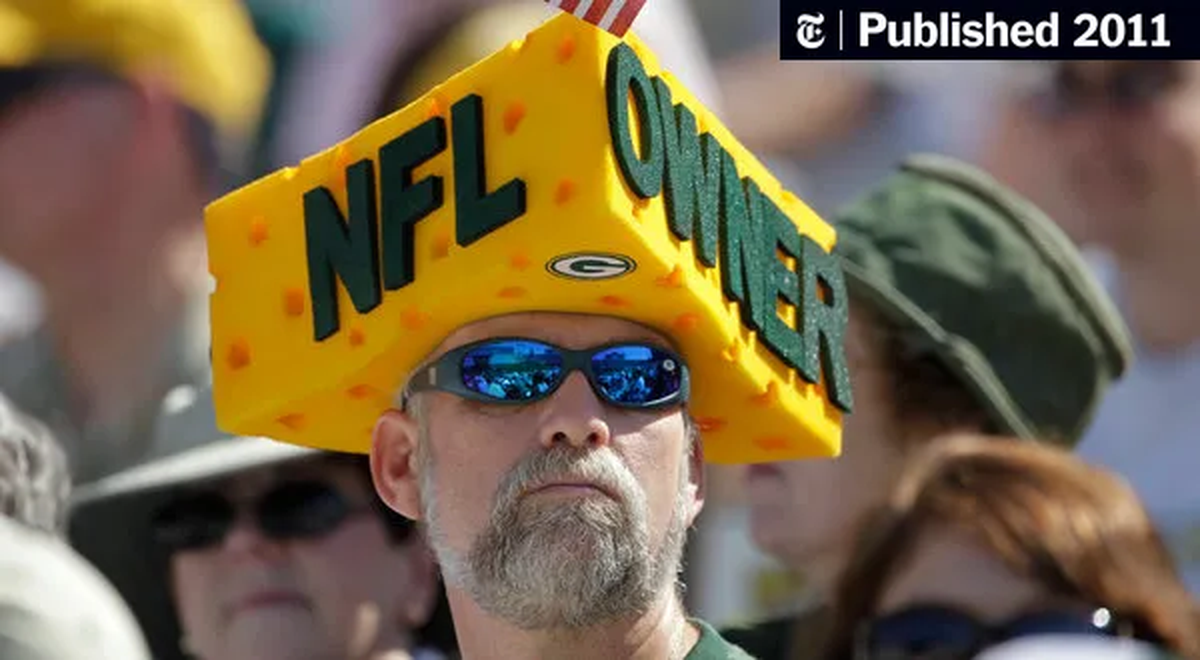
The Packers are the only publicly owned franchise in the NFL. There is no billionaire owner, private equity fund or family dynasty behind the team. Instead, more than 538,000 shareholder accounts collectively hold more than 5.2 million shares in the organisation. These aren't shares in the way most of us would normally understand them. They don't pay dividends, aren't designed to increase in value and can't simply be sold when you decide you've had enough of Green Bay.
The history helps explain how the model came about. The Packers have been community-owned since 1923, and the 1950 stock sale was particularly important. The franchise was struggling financially, facing almost $90,000 in losses and difficulties meeting payroll. A stock sale raised more than $100,000 and helped keep the team alive. The most recent sale, in 2022, raised approximately $64.7 million and added more than 177,000 shareholders, with the money going towards projects at Lambeau Field.
Nobody is buying Packers shares because they think they are going to get rich. The appeal is being able to say you own a piece of the team.
What Are You Actually Buying?
The way people treat Packers shares is incredible. They have been bought as first communion presents, wedding presents and gifts for grandparents, with people framing the certificates and putting them on the wall. Nobody is doing that with their Microsoft shares. The certificate is a way of showing that you have a stake in the team, rather than an investment expected to deliver a financial return.
You see that throughout Green Bay. Lambeau Field is more than a stadium, and the Packers are woven into the identity of the town.
That changes the questions an owner might ask. If I own shares in a company, I probably want it to make money. A Packers shareholder might be more concerned with whether the people running the organisation are looking after the team. Will it still be here in 20, 30 or 50 years? Will it still feel like the Packers? Will the next generation have the same connection to the team?
Those are different priorities from simply wanting a financial return.
The Agency Problem
Michael Jensen and William Meckling explored this relationship in their influential 1976 paper on Agency Theory. They explain that the people who own a business and the people who run it don't always want the same things. An owner might be thinking about the long term, while a manager might be focused on their bonus, reputation or hitting this year's target.
The Packers ownership structure doesn't remove that problem. Shareholders aren't deciding which quarterback to draft or which free agent to sign. They elect the board, which oversees the organisation, while professional executives run the business and football operations.
What changes is what the owners value. A conventional shareholder might ask, “Are we making enough money?” A Packers shareholder might ask, “Does this decision compromise the integrity of my team?” The principal and the agent are still present in this model, but the expectations of the people who own the organisation are different. They are not simply just looking for a financial return on their investment. They are heavily invested in what the team represents, how it is run and what it means to the community
From Green Bay to Ireland
There is an Irish comparison that came into my mind when looking at the Packers through a business lens: Dairygold, Ireland's largest farmers co-operative. For generations, Irish farmers have come together to own organisations that serve their members. They aren't just customers buying a product or service. They have a stake in the organisation and an interest in its long-term success because that success affects them too.
The relationship is slightly different from a traditional company. If you are a Dairygold member, the organisation exists to support the farmers who own it, rather than simply maximise a return for an outside shareholder. That doesn't mean commercial performance is unimportant. The co-operative still needs to be profitable, invest for the future and compete in its markets. But there is a wider purpose behind the business and a different relationship between the organisation and the people who own it.
That is where I see the connection with Green Bay. A Packers shareholder isn't buying a share because they expect a dividend or a capital gain. They are buying into something they feel belongs to them and that they want to see succeed over the long term. In both cases, ownership creates a sense of connection that you don't necessarily get when your only relationship with an organisation is as a customer or an investor.
The comparison isn't exact, but the principle is similar. Ownership gives people a different relationship with an organisation, particularly when its success matters for reasons beyond financial return.
But There Are Trade-Offs
The Packers model isn't perfect. Its biggest limitation is access to capital. A billionaire owner can write cheques almost on demand when a club needs investment. Private equity can inject capital, while a sovereign wealth fund like what us happening in Manchester City can bring enormous financial resources to a sporting organisation. The Packers can't simply rely on one wealthy backer to do the same.
Green Bay have built substantial financial reserves over decades and can raise money through stock sales, but those sales are relatively small compared with the sums available to teams with wealthy owners or outside investors. Lambeau Field is old and needs investment to remain a modern NFL stadium, so being community-owned does have its benefits, but the model doesn't remove the financial pressures.
Like all professional sports teams, the Packers still need to generate money through ticket sales, sponsorship, merchandise and television revenue. The difference is that when a major investment is needed, there isn't a single wealthy owner who can simply put more money into the organisation. That is the trade-off that comes with the model.
What Does Ownership Actually Mean?
This is why Andy Burnham's comment caught my attention in the first place.
Manchester City and Green Bay couldn't really have more different ownership models. One is backed by enormous financial resources and has become a global football force. The other is owned by hundreds of thousands of supporters who aren't expecting a return.
Both are businesses that need to generate money, compete and have people running them who can make good decisions. The difference is what the people who own them actually expect from the club.
For Manchester City's owners, winning everything and winning it fast and at all costs was the sole aim of their investment project. The money invested has transformed the club, but the commission found serious breaches of the Premier League's rules. In the pursuit of success, the interests of the owners were put ahead of the other Premier League clubs, their own supporters and the overall integrity of the competition and the game.
For a Packers shareholder, the return is you own a small piece of a team you care about and thats it really.
I wonder, would Manchester City fans swap all the success they have enjoyed for an ownership model like the Green Bay Packers, where the priority is protecting the team for the future rather than winning and at all cost?
Blog by Padraig O'Donnell