THE TRANSFER MARKET: Why Football Sells Players but America Trades them
By Padraig O'Donnell
13 September 2026 · 9 min read
I recently wrote an article covering Brighton FC with a pricing lens that looked at their approach to buying, developing and selling footballers. That article then got me thinking about the football transfer market itself.
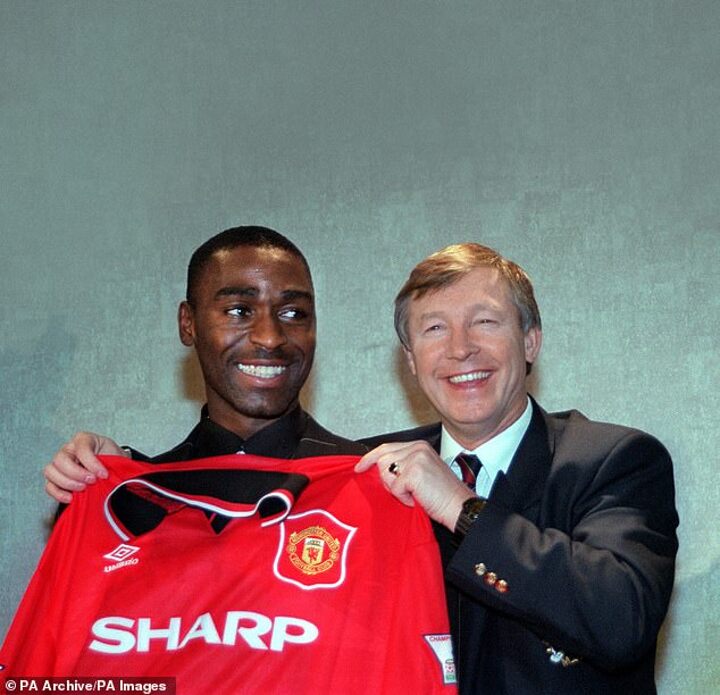
The first transfer I can remember was Andy Cole's shock move from Newcastle United to Manchester United in January 1995. United paid £6m, plus Keith Gillespie going in the opposite direction as part of the deal.
I was 11 years old at the time, but I remember the idea of two players effectively being swapped feeling unusual. I remember thinking: what if Keith Gillespie didn't want to go to Newcastle?
Fast forward 30 years and very little has changed.
We have just come through another huge transfer window, with Premier League clubs spending enormous sums on players, and the basic transaction is still remarkably simple. Club A wants Player B, Club A pays Club B £50m and Player B moves to Club A. Occasionally a player goes the other way, but usually as part of a deal that is still ultimately valued in cash.
That got me thinking. Why do football clubs tie up such huge sums of cash in transfer fees, and why don't they trade players like American sports teams?
American sport has been doing exactly that for decades. In the NBA, NFL, NHL and MLB, teams exchange players, draft picks and contracts. A player effectively becomes part of the currency used to acquire another player.
So why did two major sporting systems, both built around competing for a limited supply of talent, develop such different ways of moving that talent around?
The answer is less about sport and more about institutional theory. Different institutional structures created different marketplaces for essentially the same underlying asset: sporting talent.
Two systems, two markets
One of the main reasons is that the major American sports leagues are closed competitions. There is no promotion and relegation, and franchises operate within a centrally controlled league structure.
That gives those leagues much greater scope to build systems around how talent enters the competition, how much teams can spend and how players can move between them.
The draft is a key part of that system. New talent enters the professional league through a centrally controlled mechanism, with the draft order designed to give weaker teams access to better prospects. Salary caps, roster rules and collective bargaining then created a framework around contracts and player movement.
Once those mechanisms were established, players, contracts and draft picks could become tradable assets.
The Anthony Davis trade in 2019 is a good example. The Los Angeles Lakers acquired Davis from the New Orleans Pelicans in exchange for Lonzo Ball, Brandon Ingram, Josh Hart, draft rights, multiple first-round picks, a draft pick swap and cash.
That sounds complicated because it is. But that is the point.
The transaction wasn't simply "the Lakers want Anthony Davis, so they need $X million."
The Lakers could assemble a package of assets that the Pelicans valued and exchange them directly for the player they wanted.
Football developed under very different conditions. Clubs were independent businesses competing in open leagues, promotion and relegation created constant movement between divisions and there is no central draft allocating young players to clubs.
If a club wanted a player contracted to another club, the primary solution became negotiating a transfer fee. There are cases where clubs trade one player for another and some examples of this was Arsenaltrading Ashely Cole for William Gallas plus cash. While player swaps do happen in football, they are very much the exception rather than the norm.
American sport effectively developed a marketplace where the asset itself could become part of the currency, whereas football developed a market where the asset generally has to be converted into cash before that cash can be used to acquire another asset.
Football clubs can create their own assets
There is another important reason why football is so cash focused. Football clubs can create transferable player assets themselves.
A club can scout a seven-year-old, bring that player into its academy, develop them for a decade and eventually decide whether they are good enough for the first team. If they aren't, the player doesn't necessarily disappear from the game. They can be sold to another club, potentially generating a significant return through a transfer fee without ever pulling on a first team jersey.
That is one of the reasons Brighton are such an interesting example. Their model isn't simply about buying footballers cheaply and hoping they become more expensive. Their scouting network and academy create a pipeline of players who can become sporting assets, financial assets or, ideally, both.
This is where the American system is fundamentally different.
US sports franchises don't generally bring seven-year-olds into their professional organisation and spend the next decade developing them with the expectation that the resulting asset can eventually be sold to another franchise.
The development pathway is largely somewhere else.
In the NBA, for example, players traditionally came through the college system before entering the draft. There are now alternative pathways, but the basic principle remains: the professional franchise doesn't normally own and develop a child's playing registration from the age of seven in the way a football academy can.
The draft then becomes the avenue through which talent is distributed between teams.
Loans and moving value
Loans add another layer to this.
In football, a loan allows a club to move a player temporarily to another club while retaining the underlying asset.
A young player might need first-team football, a squad player might need regular minutes, or a club might want more time before deciding whether to make a permanent move.
It isn't the same as an American-style trade, but it shows that football already has different ways of moving player value around.
Develop a player, use them, loan them, sell them or occasionally trade them.
In fact, the increasing use of loans with purchase options, mandatory purchase clauses and other conditions suggests football may already be moving towards a more sophisticated asset-exchange market without actually calling it one.
The cash flow question
There is another reason the American model is interesting. A trade allows teams to move value without necessarily having to turn that value into cash first.
The NBA takes this to another level with multi-team trades. Rather than simply swapping Player A for Player B, three or even more teams can be involved, with players, contracts, draft picks and cash moving in different directions as part of the same transaction.
The reason that works is that all of those things have become recognised assets within the league's trading system.
A team might send a player to Team B, receive a draft pick from Team C and have another player move to Team C, with the three teams effectively settling their different needs through one transaction.
The important point is that nobody necessarily has to sell an asset first and then use the cash to buy another one.
That is different from the traditional football model.
If a club has a player it no longer wants, but needs to generate money to strengthen another part of the squad, it generally has to sell that player first. The asset has to be liquidated into cash before that value can be redeployed elsewhere.
That creates a very cash-heavy market.
And as transfer fees have grown, that becomes increasingly significant. A football club can have hundreds of millions of pounds of potential value sitting in its squad, but that doesn't mean it has hundreds of millions of pounds of cash available to spend.
Why football had to put the brakes on
American sports built financial controls into the structure of their leagues much earlier, with salary caps and other rules designed to control spending and maintain competitive balance.
European football largely allowed its transfer market to develop first.
As the money flowing into football grew, so did the importance of buying power. Wealthy owners could invest heavily, attract better players and improve their chances of success. Once one club did it, others faced a choice between trying to keep up or accepting that they were operating at a financial disadvantage.
The ownership landscape changed too. Football moved towards billionaire-backed clubs, huge international investment and, in some cases, sovereign wealth funds or the recent trend of Hollywood A-listers buying football clubs.
The result was an increasingly expensive arms race for talent.
There was a risk that clubs would spend money they didn't really have simply to remain competitive, hoping future success would eventually justify the investment.
That was part of the reason financial regulation became increasingly important.
UEFA's Financial Sustainability Regulations now include controls covering solvency, financial stability and squad costs, with the squad cost ratio including player wages, transfer amortisation, loan costs and agent fees.
In other words, football allowed the market to develop and then had to introduce rules to manage some of the consequences.
The business lesson
Markets don't just determine the price of an asset. They determine how that asset can be exchanged.
Football has built a market where cash is the common language. American sports built one where players, contracts and draft picks can all form part of the negotiation.
Neither system is necessarily better. They simply reflect the different structures in which the markets developed.
Once a market has been built around one way of doing things trying to change it is difficult.
The interesting question isn't whether football should copy American sport.
It is whether Football might work better if clubs were more willing or incentived to exchange and trade value directly rather than using cash as the primary currency.
What if football changed?
I'm not convinced football should suddenly become the NBA or NFL. But as transfer fees continue to rise, perhaps football will become more comfortable with moving players as part of deals rather than simply putting a cash value on everything.
This brings it back in a full circle to the Andy Cole transfer in 1995 to Manchester United.
I was 11 then and wondered why Keith Gillespie had to go to Newcastle as part of the deal. Thirty years later, I'm still wondering but now wondering why football clubs aren't doing it more often.
Blog by Padraig O'Donnell