Snakes and Ladders: The Strategic Challenge of Sustainable Business Growth
By Padraig O'Donnell
1 November 2026 · 10 min read
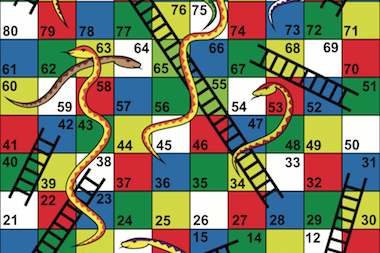
I've worked in businesses at very different stages of growth: technology start-ups scaling at pace, established technology companies and, more recently, a large global forecourt retailer. There, I saw first-hand what almost military levels of execution look like across thousands of locations and multiple continents.
I'm currently Commercial Director, responsible for Pricing & Deal Desk, at Ireland's largest staffing and recruitment company, which also operates across the UK.
All the places I have worked understood the importance of operational delivery and investing in the resources needed to support growth all be it at varying degrees.
I've also seen what happens when those areas aren't given enough attention. Growing a business can start to feel like a game of Snakes and Ladders. You win a big customer, enter a new market, launch a service or complete an acquisition, and suddenly you're climbing the ladder. But if the systems, processes and people aren't in place to support that growth, you can quickly find yourself sliding back down again.
A recent project I've been supporting to improve pricing governance and guardrails has shown me how difficult it can be to change established ways of working once a business reaches a certain size and maturity.
Growing without holding yourself back through poor operations really is the secret sauce. Crack that conundrum with a good product and a talented team, and you've got a lot of the pieces in place.
Larry Greiner and Robert Simons have explored different aspects of this challenge: how organisations need to evolve as they grow, and how to balance control with the freedom to pursue new opportunities. I'm going to have a go at adding my two cents as well.
Growth has its limits
In a small business, communication is usually straightforward. If someone needs an answer, they can walk across the office and ask the person sitting a few desks away. Decisions are made quickly, problems dealt with as they arise and everyone generally knows what's happening.
As the business grows, that becomes more difficult. There are more customers, employees, products, locations and markets to manage. The informal ways of working that once made the business agile start to creak. What worked with twenty people may not work so well with two hundred.
Larry Greiner explored this in his 1972 Harvard Business Review article, Evolution and Revolution as Organizations Grow. His model looks at the different stages of organisational growth and the challenges that come with each one. The central idea is that the approaches that helped a business succeed at one stage can become obstacles as it grows.
I've seen this with processes that were never really designed in the first place. A business finds a quick workaround to solve an ad-hoc problem. That solution becomes the accepted way of working, and the next time a similar problem arises, another workaround is added. Before long, the business has a collection of manual processes that make sense individually but become difficult to manage together.
It can also create a reliance on one or two people who know how everything works: where the information sits, who to speak to and how to get around the gaps. That might work for a while, but it isn't sustainable as the business grows.
As businesses get bigger, particularly without good operational data, decision-making can become too reliant on Finance and the P&L. The P&L is important, but it only tells part of the story. Waiting until month-end for reconciled accounts isn't necessarily the best way to manage day-to-day performance.
P&Ls also present performance in aggregated figures. A business might be doing well overall, but that doesn't mean every customer, product or service line is delivering the same results. Strong performance in one area can mask underperformance somewhere else.
Good commercial and operational data gives leaders a better view of what's happening on the ground, whether daily, weekly or at account level. It allows people to ask questions, understand why performance differs and identify problems before they become bigger issues. Without that visibility, businesses can end up relying on anecdotes, manual reports and a handful of people who know where to find the answers.
It also helps the business judge new opportunities. Knowing where the business is performing well, where resources are stretched and which customers or services are delivering a return becomes increasingly important as it expands. You need to understand what good looks like before you can make good decisions.
Winning at what cost?
Not every growth opportunity is a good one. Winning a big customer, completing an acquisition or securing a significant contract can look like a great result. The headline numbers might be impressive, but they don't always tell the full story.
Take a large contract. It looks attractive on the pipeline and might be exactly what the sales team has been working towards. But what if the price is too low, the margin is tight or the payment terms are much longer than usual?
The business still has to deliver. People and suppliers need paying, regardless of when the customer pays. If payment terms stretch to 60 or 90 days, the business may be funding the cost of delivery for a considerable period before the revenue comes in.
The headline revenue figure doesn't tell you whether the deal is profitable or whether the cost of delivering it has been properly accounted for.
Pricing is also difficult to revisit once agreed. After a customer has signed a contract, going back to renegotiate the commercials can be a difficult conversation and may not even be entertained. It may be years before there's another opportunity to review the terms.
It's crucial to get the commercial terms right before signing. Having to go back and renegotiate afterwards doesn't reflect particularly well on the business.
Sales teams need the freedom, information and support to make sound commercial decisions. Without a clear understanding of the key metrics, decisions can become inconsistent, risks can be overlooked and too many calls end up being made on gut instinct rather than data.
Freedom to do business
Good commercial governance shouldn't put barriers in front of sales teams. It should help them win business while giving the organisation visibility of the risks.
Robert Simons explored this balance in his 1995 book, Levers of Control: How Managers Use Innovative Control Systems to Drive Strategic Renewal. He looked at how businesses use control systems to monitor performance and manage risk, while still allowing people to learn, adapt and pursue new opportunities.
Get that balance wrong and you have problems. Too much control can slow decisions and frustrate people trying to win business. Too little can leave the organisation exposed to risks that better visibility and clearer boundaries might have avoided.
Not every commercial decision needs a lengthy approval process. Routine opportunities within agreed parameters should be straightforward. Larger deals, unusual payment terms or anything outside agreed thresholds may need further approval.
A clear approval process helps people understand what can be approved at manager level and which deals need higher-level approval. This is the hallmark of a dedicated Deal Desk: giving sales teams commercial support to close out deals internally, while allowing them to concentrate on finding new customers rather than chasing internal approvals.
I've written previously about this in Will It Make The Boat Go Faster? And How A Deal Desk Can Keep A Company On The Right Course. Give people the information and support to make good decisions, set clear boundaries and involve the right people when a deal falls outside them.
Getting the commercial decision right is only part of it. The business also needs the people, systems and operational capacity to deliver what it has sold.
Can the business deliver?
Growth plans need to reflect what the business can actually deliver. Entering a new market, expanding a service line or pursuing a major customer might make commercial sense, but what will it take to deliver?
Does the business have the people? Can its systems and processes support the extra volume? Will existing teams absorb the workload, or is further investment needed?
These questions need to be considered before commitments are made, not once the contract is signed and the pressure is on.
In my opinion, this is where the COO becomes particularly important. The COO should understand what's needed to deliver the growth plan, the investment required and the impact on existing resources. What shouldn't happen is that a deal gets signed and the business is left to make the commitments work after the fact.
A business can have a great product, a strong sales team and an attractive pipeline, but if the operation isn't ready, something will eventually give. Service levels for existing clients can suffer, costs can rise and customers feel the impact.
Changing while growing
Changing an established operating model is difficult enough. Doing it while the business continues to grow adds another layer of complexity. Customers still need looking after, revenue needs to be generated and employees rely on the systems already in place. You can't simply stop everything and rebuild from scratch.
It's like trying to turn an oil tanker around while it's still moving at full speed. The challenge is making changes while keeping the business running. That means choosing where to invest time and resources, what needs to change first and accepting that some improvements will take time to deliver a return.
There is rarely a convenient moment. But the longer an organisation puts off changes to an operating model that is no longer fit for purpose, the harder the eventual transition becomes.
Is it built to last?
Sustainable growth relies on betting on the future, a talent that not everyone has. Otherwise, we'd all be Lotto winners!
Investing in systems, people and processes before they're needed means spending money without a guaranteed return. But waiting until growth materialises before making that investment creates a chicken-and-egg dilemma. It's like trying to put the foundations under a house after the walls and roof have been built.
The best organisations I've worked in have had a person or team whose job, and whose performance, centred on operational delivery. It sounds obvious, but I think there's a gap in many businesses. Most companies measure and remunerate people on the sales, revenue or profit they generate. There's often little focus on who is accountable for making sure the business delivers what it has sold.
For me, this is where the COO, or Chief Operating Officer, comes in. The role is about more than overseeing day-to-day operations. A company with a strong operations team at the top table has someone making sure it has the people, systems and processes to deliver its commercial ambitions. Someone needs to focus on how well the business is operating, not just how much business it is winning.
McKinsey research found that 40% of Fortune 500 and S&P 500 companies had a COO in 2022. Meanwhile, the C-suite has become increasingly specialised, with roles such as Chief Product Officer, Chief Data Officer and Chief AI Officer becoming more prominent.
There's clearly a place for these specialist roles as businesses become more complex. But I do wonder whether businesses are overlooking the importance of operational execution. You can have a great product, a strong sales team and an ambitious strategy, but somebody still needs to join up all the dots, navigate conflicting priorities and make sure the business can deliver externally.
Perhaps that's the real challenge of growth. Knowing when to climb the ladder, but making sure the business has the foundations in place to avoid sliding back down again.
Blog by Padraig O'Donnell